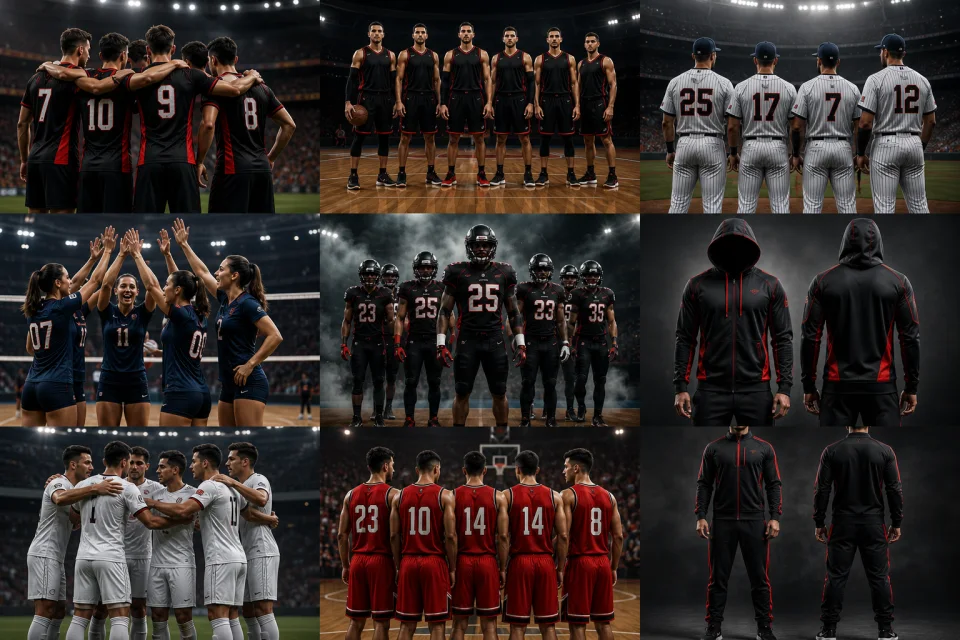
Fabric names are only the starting point
Most modern team uniforms use polyester-based fabrics, but the fibre name does not describe weight, knit structure, stretch, surface or airflow. Two polyester fabrics can feel and perform very differently.
Ask to compare the specific material proposed for your garment. Consider where the uniform will be worn, how often it will be washed and whether the design requires sublimation, embroidery or another applied decoration.
Match fabric characteristics to the sport
Fast indoor sports often benefit from lightweight stretch and airflow. Contact sports may require stronger structures and reinforced areas. Baseball programmes may prefer a more structured appearance, while travel garments need comfort and a clean presentation.
There is no single best fabric for every team. The useful choice is the one that balances movement, durability, visual finish, care and budget for the intended use.
| Characteristic | Why it matters |
|---|---|
| Weight | Comfort, drape, opacity and climate |
| Stretch | Movement and recovery through repeated wear |
| Airflow | Heat management during activity |
| Surface | Print clarity, snag resistance and appearance |
| Structure | Shape retention and support for construction details |
Decoration changes the decision
Sublimation works well for detailed colour and all-over artwork on compatible polyester fabrics. Embroidery adds texture but also weight and stiffness in the decorated area. Transfers can support detailed marks but require the right application and care.
Do not select the fabric and decoration independently. A design with large graphics, small sponsor marks and stretch panels needs a coordinated recommendation.
- Share the final artwork direction early
- Ask how colour appears on the selected base fabric
- Check stretch where decoration will be applied
- Confirm washing and care instructions
- Use samples when hand feel is a critical decision
Use samples with a purpose
A swatch helps compare hand feel, colour and weight. A finished sample shows construction and decoration. A size sample tests fit. Be clear about which question each sample is meant to answer.
Record the approved fabric reference in the order specification. Descriptions such as premium or pro are not enough on their own because they can mean different things to different suppliers.
Frequently asked questions
Is heavier fabric always more durable?
No. Durability also depends on knit structure, yarn, construction, care and the type of wear the garment receives.
What is the best fabric for sublimation?
Compatible polyester fabrics are generally used, but weight, stretch and surface should still be selected for the sport and design.
Should teams request a swatch?
A swatch is useful when weight, colour or hand feel is important. It does not replace a size sample when fit is the main question.
Need product-specific guidance?
Share your sport, quantity, destination and delivery target. Our team can help clarify the next step.