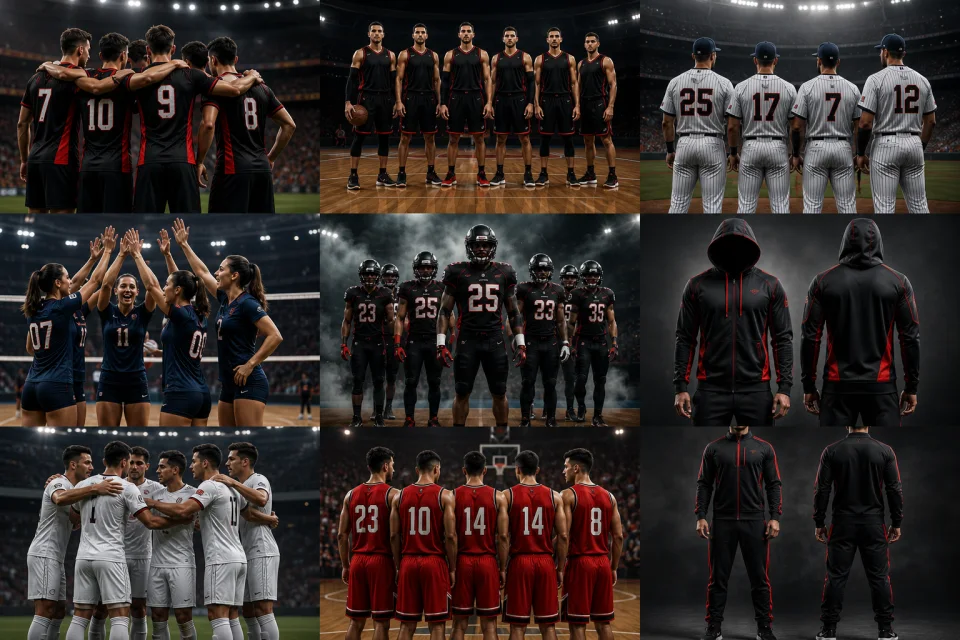
Start with the team’s real requirements
A strong soccer kit begins with a clear product brief rather than a graphic alone. Record the level of play, climate, match or training use, likely order quantity and the date the uniforms must be in hand. These details influence fabric weight, garment construction and the production schedule.
Decide which pieces belong in the set. A match programme may need shirts, shorts and socks, while an academy could also require goalkeeper variants, training tops and travel wear. Defining the range early keeps colours and branding consistent across every item.
- Sport and competition level
- Home, away and goalkeeper requirements
- Youth, women’s or adult fit mix
- Approximate quantity and delivery destination
- Existing crest, sponsor and colour files
Choose fabric around use, not a label
Performance polyester is a broad category. A smooth interlock, open mesh and structured knit can all behave differently. Ask how the fabric handles movement, moisture, repeated washing and colour. Match jerseys usually benefit from a lighter construction, while training pieces may prioritise durability.
Sublimation is commonly used for complex all-over graphics because the colour becomes part of the fabric surface. Embroidery, transfer and sewn applications can add texture but may change weight, stretch and cost. The right method depends on the design and the garment area.
| Decision | Questions to ask |
|---|---|
| Fabric weight | Will the kit be used in heat, indoors or year-round? |
| Stretch | Does the cut need extra give through shoulders and body? |
| Decoration | Is the artwork full coverage, minimal or textured? |
| Care | How often will the uniforms be washed during the season? |
Prepare the roster and artwork carefully
Provide the team crest as a clean vector file when possible. If only a small image is available, request an artwork review before expecting a final design. Confirm the official colour references, sponsor placement rules and any league requirements that affect numbering or logos.
Roster mistakes are avoidable. Build one final sheet with player name, number, garment size and goalkeeper status. Use a single person to approve that file and avoid sending corrections across several chat threads. The approved roster should match the visual proof.
- Check spelling and character accents
- Check duplicate or missing numbers
- Confirm front, back and sleeve placements
- Approve one final roster version
- Keep a copy of the approved artwork
Approve the specification before production
A visual preview confirms appearance, but the order specification confirms what will actually be made. Review garment type, fabric, size breakdown, quantity, names, numbers, delivery address and timing together. Ask for clarification whenever a detail is not shown clearly.
Leave time for review and transit. Tournament dates are fixed, so rushing the artwork stage can create preventable errors. A measured approval process gives the manufacturer a stable specification and gives the team a reliable record of what was ordered.
Frequently asked questions
What files should we send for our team crest?
Vector artwork such as AI, EPS, PDF or SVG is ideal. A large clean PNG can also help. Send the best version available and request an artwork check.
Can goalkeeper kits use a different colour?
Yes. Include the goalkeeper colour and roster requirements in the original brief so the variant can be designed and approved with the main kit.
When should the final roster be submitted?
Submit the checked roster before production approval. Changes after approval can affect timing and may not be possible once manufacturing begins.
Need product-specific guidance?
Share your sport, quantity, destination and delivery target. Our team can help clarify the next step.